From President Sharon Herzberger's Toxic Pen: Whittier College
plan for artificial turf playing field
ignores health hazards warnings...
Whittier College President Sharon D. Herzberger just can't seem to get anything
right, and continues to get too much wrong. From 'The President's Pen', published
in Quaker Campus on February 14, 2008 (a couple of weeks before Herzberger, joined
by two other female Whittier College administrators, left on a completely unjustifiable
tour of mainland China - even if any of these administrators were fluent in Mandarin,
nothing was attempted that couldn't have been done at a tiny fraction of the junket's
costs, or for nothing, without leaving Whittier):
"...we are developing plans to install an artificial turf field in Wallace
'Chief' Newman Stadium this summer. The field will provide a safer playing surface
for our football and lacrosse teams, and because it can be used around the clock,
next year we will expand our intramural program for the pleasure of all students."
Good Lord. Well, Sharon Herzberger has proven, yet again, that what comes out
of a president's mouth can be indistinguishable from what comes out a horse's
ass. Any individual whose athletic experience amounts to an occasional sissy walk
around is likely to make a horse's ass of him- or herself when trying to speak
authoritatively about sports. All athletes, down to small children, will tell
you that artificial turf is more, not less, dangerous than a grass field.
President Herzberger can test her assertion, that artificial turf is a safer surface
than grass, by running across and then throwing herself face down onto a grass
field, and then onto artificial turf. We guarantee that Sharon will, after this
test, never again falsely claim that artificial turf is a safer surface than natural
grass.
In all contact sports, athletes go down, sometimes hard. Sometimes athletes slide
over a field surface. In such instances, natural grass is forgiving, but artificial
turf will cause abrasions and even lacerations. And do not wear cleats in games
played on artificial turf. Natural grass fields allow cuts and turns, pivoting,
spin moves, every move made in athletic competitions, without adding to stress
loads. Wearing cleats in competition on artificial turf causes dangerously increased
stress loads on athletes, most dangerously on knees.
Recent research into artificial turf playing fields has led the State of New Jersey
to close, to lock, some such facilities - because lead released by decaying nylon
fibers has been found to exceed, by 8 - 10 times, according to New Jersey Deputy
Health Commissioner Dr. Eddy Bresnitz, the allowed lead level in soil samples.
The decaying synthetic fibers release a lead-bearing fine dust that is inhaled
by everyone in the vicinity of such fields, as well as by those athletes competing
on such surfaces, some of the latter also digesting constituent and released dust
particles.
In addition to the toxicity of decaying nylon fibers, the rubber granules used
in artificial turf fields, when heated, as they are relentlessly by the southern
California Sun, emit chemicals that irritate eyes, skin, and respiratory systems.
At least one of the chemicals emitted has been identified as a known carcinogen,
according to a study, 'Examination of Crumb Rubber Produced From Recycled Tires',
conducted by the Connecticut Agricultural Experiment Station's Department of Analytical
Chemistry, at the request of non-profit Environment and Human Health, Inc., headquartered
in the greater New Haven area.
The mother of a young soccer player, interviewed by ABC News in a special report
on this problem, refuses to allow her child to play on artificial turf, pointing
out that toxins released by synthetic fields are a danger at the facility, and
at homes, where both constituent particles and released toxins are accidentally
carried by athletes. Urging further studies, this concerned mother warns, "We've
got our children playing in what's virtually a hazardous waste dump." Concern
about artificial turf has become so widespread that an investigation of artificial
turf by the Consumer Product Safety Commission is underway.
The reality of artificial turf is that the first generation, astroturf, was rejected by professional sports organizations all over the world. Now, the so-called second generation, basically astroturf with waste tires broken up into crumbs, and silica sand mixed in, a poisonous soup that starts offgassing carcinogens at 120 degrees Fahrenheit, is also being rejected. Artificial turf surface temperature has been recorded as high as 200 degrees Fahrenheit, and turns out to be an artificial safe harbor for all kinds of bacteria, including MRSA, for which turf burns serve as a portal for infection and transmission, according to the Center for Disease Control.
The second generation of artificial turf is also being rejected by professional sports organizations and universities - because of higher injury rates, health risks, environmental dangers, and maintenance costs. That's why the artificial turf industry is pushing product on rec and parks districts, smaller schools, and even homeowners, who are relatively uninformed about the health, safety, and environmental hazards posed by, as well as the higher than expected maintenance costs of, artificial turf, and why a third generation of artificial turf is already in development.
Largely because of the waste tire content in the second generation of artificial turf, the EPA and other federal regulatory agencies have actually been facilitating artificial turf installations. When waste tires were banned from dumps across the U. S., and facilities had to become licensed to store any significant quantity of waste tires, getting rid of approximately 25,000 waste tires in a single artificial turf installation became very attractive - to those who just don't give a damn about our health or safety or local environments. Why pay to store hazardous waste when you can sell it? - the criminally-minded ask themselves. Waste tires are now found in everything from livestock mats to playground mats, the ones that are burning little kids on sunny days.
The artificial turf industry, raking in billions a year, has lots of money to lobby regulators and legislators, to buy so-called expert witnesses, to overwhelm our understaffed regulatory agencies, which, by failing to standardize such products, incalculably complicate content analysis not only between installations but even within different sections of single installations. The latest in a series of efforts across the U. S. to hold the artificial turf industry to account is a lawsuit, brought by California Attorney General Jerry Brown, against three artificial turf makers over lead content in synthetic grass in California. It appears that there will be many more lawsuits issuing from other attorneys general, ngo's, and private parties, individually and in class action lawsuits, against the purveyors of poison.
Eventually, there will be comprehensive legal challenges to artificial turf. This process can be sped up if the new Obama administration quickly revives federal regulatory agencies become practically moribund during the Bush administration. Norway, a less compromised, more straightforward, democracy, has already banned artificial turf.
There are two very good online compendiums of information on artificial turf:
www.synturf.org
and
http://sfparks.googlepages.com
You will never see artificial turf the same way again after seeing these two online compendiums!
That the Trustees of Whittier College, President Sharon Herzberger, the Athletics Department, and sciences faculties, all either promoted or remained silent about the summer 2008 installation of artificial turf on the College campus, reveals the truth that Whittier College simply does not care about students or the larger community, or science, morality, ethics, or anything but its bottom line. Evidently, in Whittier College's economic model, the bottom falling out is a mere externality.
whittiergate.com and others made sure that Whittier College decision-makers knew the dangers to everyone in the vicinity of artificial turf before the College ripped out the traditional natural grass Stadium field and had Sprinturf installed. Whittier College administrators purposefully released only pro-artificial turf information to Quaker Campus, and only at the very end of the 2007-2008 school year, which, as intended, precluded any response from students and other concerned parties. When the 2008-2009 school year began, there was the artificial turf 'field', a fait accompli by the administration and trustees. The only catch is that the artificial turf is poisoning staff, users and fans, and Whittier College campus and surrounding community residents, visitors, and workers, and Whittier College is liable for this community poisoning.
Whittier College evidently believes the College can violate the free speech and free press rights of its own students and student press, and even of the local press, but the College can't achieve a news and information blackout, not anymore. Whittier College doing business in the same old heavy-handed, not to mention immoral, unethical, and even criminal, manner, this time, is going to result in only tons of bad publicity and significant payouts. Whittier College was made aware of the fact that installing artificial turf on campus was harmful to the sports played on it, to the young student-athletes and intramural participants playing on it, to maintenance workers, cheerleaders, referees, coaching staffs, and to everyone beyond the stadium reached by air, soil, and groundwater polluted by the installation.
To whittiergate:
"When your school stops serving orange juice and starts serving Tang, you know things have gone very wrong."
The replacement of traditional natural grass in the stadium with plastic, crumb rubber and silica sand - all threats to human health and safety, potentially fatal threats - is not only a crime against the local and visiting populations, but is also aesthetically offensive. If groundskeepers in 2008 can't keep a natural grass field looking good, then it's the groundskeepers and their supervisors who need to go, not the natural grass. whittiergate doesn't know yet whether new structures built on campus contain harmful materials, but it's too clear new buildings do not conform to, undermine, the College's traditional architecture. Decision after decision after decision by Whittier College seem practically calculated to destroy what tradition the College can yet cherish.
Environmentally, artificial turf is a disaster. Runoff replaces soil absorption of rain, and this rain-driven runoff, as well as the constant washings of the artificial turf required to keep it playable, carry pollutants into adjacent soil and groundwater. Likewise, the air is fouled by offgassing of carcinogens and lead-bearing dust and silica dust. On typical hot southern California days, artificial turf becomes a heat island within an urban heat island. While the natural grass Stadium field had helped bring some respite from the heat, and while the real grass sequestered carbon, artificial turf is silently busy superheating the campus and making a big carbon footprint.
whittiergate has received many communications regarding the Sprinturf installation on campus, most of the authors expressing fear of retaliation if their identities are divulged or inferred, that their place on a team, or their employment, may be taken from them, that they might be unfairly characterized or recommendations or awards might be denied them, so we will not publish any more of them, now. But we want our visitors to know that there is widespread concern being expressed about what Whittier College is doing to students and the entire community and where the school is headed, which most suggest appears to be straight down. We have received literally no communications supporting the installation of artificial turf on campus, not a single one.
If you insist on exposing yourself to artificial turf, you should first check the installation's surface temperature. BYU closes its artificial turf installation when its surface temperature reaches 120 degrees Fahrenheit. Use your eyes; you can see heat rising in waves. That's the temperature at which offgassing (of known carcinogens) from the installation begins. Use your nose; do not inhale gasses emitted from artificial turf. Heat transfer from installation surfaces has burned feet through shoe soles (BYU) and melted cleats (Syracuse).
Whittier College needs to monitor its Sprinturf installation surface temperature and close it when burn risks and offgassing exposures are known to exist, to test and test again and again the installation, air, soil, and groundwater, for pollutants issuing from the installation, and to study injuries on the stadium 'field'. Shoes with cleats need to be banned from the Stadium's artificial turf. Since pollutants are shed more and more as the artificial turf ages, monitoring and testing must continue until the installation is taken as required to a licensed hazardous waste facility.
Drink lots and lots of water. Dehydration-related illnesses (heat cramps, heat exhaustion, heatstroke, among them) caused by artificial turf's often high temperatures are becoming more and more common.
Survey the artificial turf 'field' before using it to make sure it's free of obvious contaminants, like bird droppings, spit, blood, etc. Natural grass renders such contaminants harmless, but artificial turf is it turns out a practically ideal host for phenomenal bacteria growth. Try to avoid getting 'turf burns', and if you do, have them treated immediately. Potentially deadly MRSA, found on everything from your nose to cell phones to locker room soap bars, as well as on artificial turf, and other infections, use turf burns as portals.
The New Jersey Department of Health and Senior Services advises anyone who has been on artificial turf to clean shoes and turn clothing worn on artificial turf inside out and wash them separately, and to vigorously wash their body. It's recommended that children under 6 years of age be given a lead test. Lead in second generation artificial turf can derive from the crumb rubber as well as from lead added to keep the fading plastic green, so the lead danger is actually considerably greater in second generation than in first generation artificial turf.
Do not lie down on artificial turf, and get up from the surface as quickly as you can when you've been knocked down. Do not ingest any rubber particles or grains of silica sand. With every step, you can see countless rubber particles being thrown up into the air by down coming shoes. You usually can't see the silica dust thrown up with the naked eye. Make every effort to avoid inhaling silica dust. Those who work with silica must wear special respirators. Silica is not to be swept up, but to be wet vacuumed. This is because silica can cause scleroderma, silicosis, and cancer, among other illnesses.
Most of what Sprinturf represented to Whittier College about the installation will be proven to be misrepresentations, but if decision-makers at Whittier College can't figure out that second thoughts are in order when it's admitted to them that a 'product' has to be disposed of at a licensed hazardous waste site, then should they really be making any decisions at all for the College?
But what's most disturbing is the fact that once it was clear to everyone that the artificial turf installation was a most serious mistake, with serious long-term consequences, the decision-makers at Whittier College decided to try to censor public discussion of the Sprinturf Trojan Horse, to deny the College's responsibility for the mistake and its consequences, and leave the artificial turf in place, to poison the entire community on a continuing, on an increasing, basis, rather than do the right thing.
This - Whittier College trying to silence recognition of mistakes and their consequences, and, by refusing to address them, to prevent correcting them, remedying and preventing any further consequences, and trying to make sure such mistakes aren't repeated - has gotten to be a very old story at Whittier College. whittiergate.com was created as an anti-dote to just this dark side of Whittier College, a side that is spotlighted again and again on this site. This aberrant behavior is in Whittier College's case normal, that is, Whittier College's behavior is usually darkly aberrant. And, if we're lying to you, why is whittiergate still online?
Whittier College has tried lots of Dirty Tricks against this site, but no legal action has been taken. If Whittier College, ever more infamous for its Dirty Tricks and violations of free speech and free press rights, and the endless needless consequences for mistakes denied and so never corrected - and these consequences are principally to young human beings Whittier College has promised to protect and educate - could treat with whittiergate as it has, repeatedly, with its student press, Quaker Campus, the College surely would. The courts may in the end prove the only way to remedy mistakes and change Whittier College's unethical and criminal modus operandi.
Whittier College is a pathological institution that needs to change or be changed, and the longer that takes, the more victims there will be, now and on into the future. The worst effects of artificial turf exposure do their damage to victims over time. Like the student who cheated and so didn't learn, but was graduated anyway, who's later fired for incompetence or is busted for white collar crimes; or one who sexually assaulted another student and got away with that crime at Whittier, but is later, away from the College's corrupt and corrupting sphere of influence, imprisoned for that same act, and the assault victim who was denied and carries that sense of worthlessness throughout her lifetime, and all the victims like her in the chain of that repeated crime and it's consequences; the student-athlete who dies of cancer, years after graduation, is, so far as Whittier College decision-makers concern themselves, out of sight, out of mind. This is pathological, immoral, unethical, and even criminal; this is indefensible, inexcusable; this must change. What could be worse than subjecting college students to artificial turf? Well, Whittier College is excited about making money renting the artificial turf Stadium 'field' to high school teams. These practices must be stopped, and these policies must be changed.
Gourmet natural foods and an international jet set lifestyle for Sharon, and Reservation
rations and a toxic playing field, that becomes more toxic the longer it's in
place and the more it's used, for us?
New: Curse of the Three White Men From Town
The three individuals - Chester 'Chet' McCloskey, David D. Mandarich, and Rayburn 'Ray' Dezember - who underwrote Whittier College's installation of health, safety, and environmental hazard artificial turf in place of the Stadium's healthy, safe, and environmentally friendly natural grass field - really have cursed the Whittier College campus and surrounding environment.
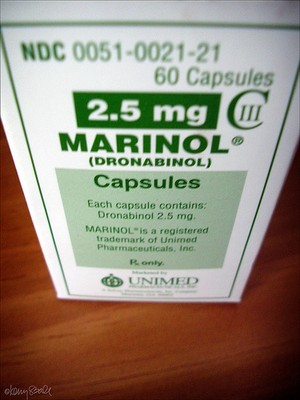
Chet McCloskey (Whittier College, ' 40) made his fortune through Norac Industries, his chemical company based in Azusa, and later expanded into pharmaceuticals. One of Chet McCloskey's pharmaceuticals, for which he obtained a production monopoly, is Marinol. Marinol is 98% pure THC, the psychoactive compound naturally occuring in marijuana. Marinol is available by prescription for treatment of AIDS, cancer nausea, and wasting disease in 2.5, 5, and 10 milligram doses. There are many reasons why Marinol has little potential for abuse, and why marijuana is preferable to synthetic THC for treatment of the conditions for which Marinol is prescribed.
' Marinol vs. Marijuana: Politics, Science, and Popular Culture ' by Kambiz Akhavan
http://www.drugtext.org/library/articles/Marinol01.htm
' Marinol: The Little Synthetic That Couldn't ' by Elsa Scott for High Times, July, 1994, pp. 18-21. After dogs on nabilone started having convulsions and dropping dead, the first attempts at producing synthetic THC were scrapped. Enter Marinol, a drug never intended for human use and one with many dangerous side effects. http://www.marijuanalibrary.org/HT_Marinol_0794.html
The LD/50 (a dose killing half of research subjects) for smoked marijuana is the equivalent of smoking 1,500 lbs. or 680 kilograms of marijuana within 14 minutes, according to the 12fth edition of the Merck Index. The LD/50 for injected Marinol (Dronabinol) is 30 mg/kg (2100 mg/70 kg). Significant CNS symptoms in antiemetic studies followed oral doses of 0.4 mg/kg (28 mg/70 kg) of Marinol.
' Carl Olsen Interviews Laurence McKinney of Cambridge Pharmaceutical Labs, Inc '. - July 20, 1991
http://www.lycaeum.org/leda/docs/12887.shtml?ID=12887
It's hardly a surprise that the war on drugs and the DEA, an ill-informed and dangerous policy and agency hatched in the sick mind of Dick Nixon and implemented by obedient droids like Whittier College Trustee Geoffrey Shepard, criminalize the culture of the post-Hiroshima generations while monopolizing profits from an inferior and dangerous substitute drug for Whittier College alumnus Chet McCloskey, an oil era better living through chemistry menace to society and planet.
"The FDA has written documentation that patients
can overdose on Marinol and...it can be lethal -
3 deaths are directly attributable to Marinol to date,
whereas marijuana in its natural form has never killed anyone"
while being widely used for thousands years.
'Does the Pot Pill Work? A Look at Marinol': http://patients4medicalmarijuana.wordpress.com/2009/08/24/does-the-pot-pill-work-a-look-at-marinol/
"The DEA helped facilitate the research on Marinol." See the DEA pushing synthetic
marijuana at http://www.justice.gov/dea/ongoing/marinol.html
Chester McCloskey, like some of those who bought Marinol, recently passed away, but not before Whittier College was able to talk the elderly Chet out of between $3 and $5 million.
Whittier College Trustee David D. Mandarich, whose son Christopher graduated from Whittier College, where he was associated with the men's LAX (Lacrosse) team, a team with a history as unsavory as that of the infamous Duke LAX team - the Poets LAX team is just better protected from scandal than the Blue Devils LAX team has been; a boosters club is one thing, a player parent on the school's board of trustees is another - is the second of the three individuals who underwrote the health, safety, and environmental hazard artificial turf installation on campus. Interestingly, the most infamous Duke LAX team had one Black player on its otherwise all-White roster, while the majority Latino City of Whittier is run by a City Council whose members are four White males and one White female.
The most infamous Duke LAX team may wish us to believe that because the criminal sexual charges case against some of their number were dropped that they look good. They don't even look just okay. The White Duke lacrosse team hired Black strippers to 'entertain' them. That objectification of minority females, the bringing out of the worst in each other by those team members, all proven by those players own email texts, makes them despicable. The only question in the Duke lacrosse team scandal was just how despicable those boys really are.
A Whittier College lacrosse team terrorized female dorm residents and those LAX players getting away with doing so doesn't make them any less despicable either. And we won't get into how the Poets women's lacrosse team coach was knocked up by the Poets football coach and had to marry him. Help! Whittier College is like a high school you'd rather be home schooled than suffer through!
Lacrosse participation has grown dramatically and in direct proportion to the integration of youth soccer. Lacrosse is an almost exclusively upper middle class private school sport, is a refuge from diversity and meaningful competition. Every time one sees spoiled privileged kids playing lacrosse, one wishes for a Native American team to take the field and kick ass, take back their sport from these Richie Rich wannabe boyz. Whittier LAX has a reputation as a team of well-connected spoiled bullies and cavalier law breakers. Now that Whites are a minority at Whittier College for the first time, we'll see how long it takes for the other minorities on campus to stand up to the bullying...
The elder Mandarich sits very nearly atop the MDC Holdings pyramid with Larry Mizel, with only Leonard Yale Millman above them. MDC operates numerous companies, including Richmond American Homes, one of the largest home builders in the United States. One can only wonder at Mandarich's motivation in regard to the artificial turf installation. In addition to having been interested in Whittier College athletics through his son's former involvement therewith, MDC Holdings's Richmond American Homes spokespersons state that the company is seeking to make a deal with an artificial turf manufacturer for another landscaping option, citing the now standard artificial turf sales pitch - conservation of water, maintenance savings, the usual artificial turf installation marketing pack of lies. Richmond American intends to sell this new landscape option as a 'green' alternative, despite the fact that artificial turf is an environmental as well as health and safety disaster. Richmond American Homes appears to be on track to offer an artificial turf landscaping option in approximately a year's time.
Whatever David Mandarich's motive(s) for contributing to the artificial turf installation on campus, he must be ignorant of the hazards posed to users, spectators, and community members by artificial turf installations, surely he wouldn't want LAX players to be exposed to those potentially deadly hazards - or maybe he just doesn't care now that his son has graduated. And it appears as though tens of thousands of consumers in housing and community developments across the country, most likely to begin with Richmond American Homes California projects, will reportedly soon be exposed to this same ignorance or worse, and to these same potentially lethal dangers. One can only feel fairly confident that Mandarich's tax write off for this contribution, however much harm it may do to others through the big festering, offgassing and soil and groundwater polluting, toxic carbon footprint now installed where a badly maintained natural grass field once improved the health of students and community, will benefit him.
For a profile of Trustee David D. Mandarich, see The Infamous and Otherwise Unlucky of Whittier College page on this site. The dismissal of a charge against Mandarich for laundering money through illegal campaign contributions after the sudden death of the case judge's daughter, when before his daughter's death, alleged to have been the result of foul play, the judge described the evidence in the case as being unusually strong and indicated his intention to make an example of MDC's Mandarich and Mizel, is a highly disturbing aspect of the profile, which also includes Mandarich's roles in federal securities law violations and the plumping up and looting of Silverado Savings & Loan, which 'lost' billions before being closed by the feds, as well as MDC Holdings executive compensation issues and a successful class action lawsuit against Richmond American Homes.
The third individual co-responsible for underwriting Whittier College's artificial turf installation mistake is Rayburn 'Ray' Dezember (Whittier College, ' 53), a retired Bakersfield banker. Dezember's official life story is a wonderful read - captain of the Poets football team under legendary coach George Allen (whose son's political ambitions were quashed by his thoughtless public utterance of a colloquial French racist slur evidently learned from his mother), Whittier College student body president, successful banker, and leading San Joaquin Valley philanthropist and statewide reform activist.
If one reads only the public relations coverage of McCloskey and Mandarich, these guys sound wonderful, too, but McCloskey and Mandarich turn out to be bad, not good, guys. We can only hope Ray Dezember turns out to be a good guy, but we're not willing to bet on that possibility, so more on Rayburn to come...
So we have Chet, this country's monopolist synthetic marijuana dealer, Dave, the master scam artist under an offer that can't be refused cloud of suspicion, and Ray, the lead in a too good to be true story, to thank for the health and safety and environmental hazard artificial turf installation now fouling the Whittier College campus and surrounding community.
The kicker is that all Whittier College had to do to have a wonderful - a healthy, safe, and environmentally friendly - natural grass stadium field was to have the groundskeepers learn, for next to nothing, how to properly maintain a natural turf field, which would've been a far easier and a far, far less expensive lesson than the lesson they and the College are now learning in relation to artificial turf maintenance and ill effects.
The only time student health and safety, let alone the serious environmental impacts of the artificial turf installation on campus, were raised as concerns by students, they were harshly punished by the College, and haven't been heard from again on the issue since. The negative impacts of artificial turf installations intensify as an installation ages, making this issue one of increasing concern, one that Whittier College students are being coerced into suffering in silence. This is truly a curse on the entire community by three White men from town and an administration and trustees who are blatantly sacrificing student and employee and community health for the mistaken notion that artificial turf is preferable to natural grass, and they are trampling free speech and free press rights to continue their mistake and its deadly serious consequences.
A comparative natural grass - artificial turf study http://stma.cyzap.net/_files/_items/stma-mr-tabz-3300/docs/naturalgrassfields.pdf
Your Resource for Safer Athletic Fields - Sports Turf Managers Association's
The SAFE Foundation 1-800-323-3875 /http://www.stma.org/aboutus/safe/?The-SAFE-Foundation
Owners Treat Horses Better Than Whittier College Treats Students
After a three-year experiment, Santa Anita race track has ripped out its artificial
turf course installation and gone back to a natural earth track. The artifical
turf was removed primarily because it was causing too many injuries to race
horses. Santa Anita's directors admitted the decision to install artificial
turf was a mistake, cut their losses, and moved on with the preferable natural
surface.
When are Whittier College's decision-makers going to admit their mistake in
replacinig its stadium's natural grass field with an artificial turf installation?
Until Chief Newman Stadium's natural grass field is restored, and the artificial
turf taken to the only place it can be legally dumped, a toxic waste facility,
we must continue to say that horses are more highly valued than are Whittier
College students.
Installing the artificial turf was a mistake that raised questions about Whittier
decision-makers' competence. Refusinig to admit this consequential mistake and
continuing to subject students and others who go to the stadium, and even those
who are in the vicinity of the stadium, to the artificial turf's health, safety,
and environmental hazards, reveals those decision-makers' lack of conscience
as well as lack of economic horse sense.
How long are Whittier students and others going to continue placing themselves
in harm's way because of the fear / hubris of those who continue to refuse to
admit and remedy this consequential mistake, and so many others?
Back to Main Page